
Tactical Gear Guide • May 2026
Morale Patches: A Practical Guide to Picking, Placing, and Collecting
History, materials, attachment, placement, and what actually separates a $4 patch from a $9 patch — plus a look at the collector culture that's older than most people realize.
Walk past any plate carrier, range bag, or well-loved trucker hat at a public range, and you'll see them: small Velcro-backed squares stuck wherever there's loop fabric to grab them. Some are blood types. Some are unit insignia. A lot of them are jokes.
If you've spent any time around tactical gear, you already know morale patches are everywhere. What's less obvious is how to actually buy them well, where to put them so they earn their real estate, and why the $9 patch and the $3 patch are not the same product.
We've stocked morale patches for years at this point, across more than 150 designs, and we've watched the category mature from a niche military thing into a real corner of the gear world. Here's what 23 years of selling to shooters, hunters, and collectors has taught us about picking, placing, and (yes) collecting them.
By the end of this guide, you'll know the history, the materials, the attachment basics, and what actually separates a patch worth keeping from one that'll fray off your range bag in a season.
What is a morale patch?
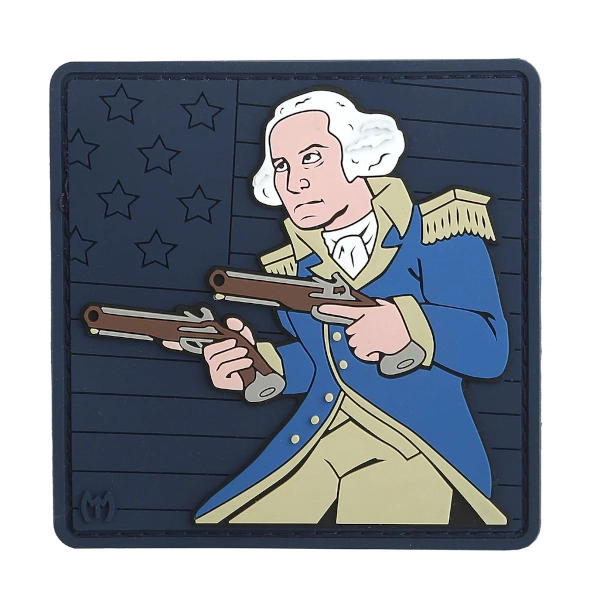
A morale patch is a small fabric or PVC insignia, attached with hook-and-loop backing, that displays unit identity, blood type, a flag, or a piece of humor. They aren't authorized for most official uniforms, but they're widely worn on plate carriers, packs, hats, and jackets by service members and civilians alike.
In practice, they do three things at once:
- Identify the wearer (unit, blood type, branch, country)
- Personalize the gear (humor, pop culture, hobby)
- Build connection inside a community (trading, gifting, collecting)
That third use is older than most people realize.
A brief history of the morale patch
The lineage starts before World War I, when the British Army issued what they called “battle patches” to identify allies and enemy units in the field. The patches were practical — they helped soldiers tell who was on their side at a glance — but they also created the first version of what we'd now call unit pride.
The first American military morale patches trace back to World War I, when the U.S. Army picked up the British practice. The 81st Division, the “Wildcats,” is generally credited as the first American unit to wear its own divisional patch. General John J. Pershing, commander of the American Expeditionary Forces, saw the morale benefit and ordered other divisions to develop their own. By the 1920s, unit patches had become widely individualized, and a small collector and trading culture had already formed around them.
From battle patch to morale patch
The term “morale patch” itself didn't really land until the Vietnam War. Soldiers started cutting, stitching, and printing patches that were sarcastic, cynical, or outright profane — comments on the war, on their leadership, on whatever they were dealing with that week. The patches were almost never authorized. That was the point.
That unofficial, unauthorized character has shaped the category ever since. Even today, the typical morale patch lives in a slightly off-regs gray zone, which is exactly why most of them attach with Velcro instead of being sewn down.
Why Velcro won
Hook-and-loop made morale patches practical for soldiers who needed to take them off before an inspection or a formal event, then put them back on for the rest of the week. Civilian gear inherited the same convention. Today, almost every plate carrier, chest rig, and range bag ships with loop panels already in place, ready to receive whatever the owner wants to display.
If you're newer to this and want to see what the modern catalog looks like, a typical retailer organizes its inventory across tactical, patriotic, blood type, and humor designs, which is a useful way to browse before you commit to a particular style.
Embroidered, PVC, or woven: which material is right for you?
Morale patches come in three common materials, plus a few specialized variants. The right one depends on where you're putting it and how hard you're going to use it.
| Material | Best For | Durability | Detail Level | Typical Price |
|---|---|---|---|---|
| Embroidered | Traditional unit insignia, fabric textures, classic look | Long-lasting; threads can fray or fade with heavy wear | Medium; fine details have a stitch limit | $4–$8 |
| PVC (rubber) | Outdoor gear, wet conditions, bold modern designs | High; doesn't fray, fade, or crack | High; clean lines and crisp color | $5–$9 |
| Woven | Typography, fine illustration, flatter profile | Medium-high; resists fraying | Highest; tightest detail of the three | $4–$7 |
A few less-common variants are worth knowing about:
- Laser-cut: clean, modern edges; great for typographic or minimalist designs
- Reflective: visible under headlights or flashlight beams; useful on a range bag or trauma kit
- IR (infrared): appears under night vision but reads as plain dark fabric in daylight; primarily used by professional and serious training customers
For most shooters and outdoor users, the choice is between embroidered and PVC. Embroidered patches have a textured, traditional feel that suits unit and historical designs. PVC morale patches handle weather and abuse better, which makes them a strong fit for plate carriers, range bags, and anything that lives outdoors.
How to attach a patch to your gear
Almost every modern morale patch uses hook-and-loop backing. The patch itself has the rough “hook” side, and your gear (or a panel on your gear) has the soft “loop” side. Press them together and they grip.
Three quick rules make hook-and-loop attachment work the way it should:
- Clean the loop panel first. Lint, dirt, and dryer fuzz fill the loops and reduce grip. A lint roller or a stiff brush takes care of it in 30 seconds.
- Align before you press. Once the hooks engage, peeling the patch off and re-aligning it tears loops out of the panel and weakens future grip. Get it square the first time.
- Press from the center out. Start in the middle and roll your thumb toward the edges. This drives every hook into a loop instead of leaving the corners loose.
That's why you'll see them sold interchangeably as velcro morale patches or hook and loop morale patches: the names refer to the same attachment method. Sew-on and iron-on backings still exist (mostly on apparel patches and unit insignia), but for the vast majority of morale patch use, hook-and-loop is the standard.
Adding a hook-and-loop panel to non-tactical gear
A common question: what if your bag, jacket, or hat doesn't have a loop panel?
Two options. The simpler one is self-adhesive loop fabric, sold by the strip or sheet. Peel and stick. It works fine on smooth synthetic surfaces, less well on canvas or anything porous. The longer-lasting option is sew-on loop fabric, which holds up to repeated washing and rough use. Either way, you can add a 2″×3″ or 3″×3″ loop field to almost any bag or hat in about ten minutes.
Where to put morale patches on your kit
Morale patches go on plate carriers, range bags, hats, jackets, IFAKs, and dedicated patch boards — anywhere your gear has a hook-and-loop field to grip them. Placement matters more than most people think. A patch in the wrong spot looks like clutter; a patch in the right spot earns its space.
A few common locations and what tends to work in each:
- Plate carriers and chest rigs: front placard above the magazines, side panels, cummerbund. Save the front-center loop field for the patch you most want to be visible — usually a blood type next to the IFAK.
- Range and EDC bags: front pouch is the high-visibility spot; the side and top panels are good for secondary patches you don't need to read at a glance.
- Hats and caps: front panel for one statement patch; back strap for a smaller secondary.
- Jackets and shells: shoulder or upper sleeve. Avoid the chest if you're wearing a pack — the strap will cover the patch every time you put the pack on.
- IFAKs and trauma kits: blood type, allergy notes, and any medical-relevant patches belong here. This is one of the few placements where a morale patch is doing real work in an emergency. If your trauma kit doesn't have a blood-type patch on the outside, that's the first one to add.
- Patch boards or display walls: for collectors who've outgrown their gear's real estate. A 12″×16″ loop board holds a surprising number of patches.
For setting up a patch-friendly kit from the ground up, our tactical gear selection and bags and packs include plenty of options that ship with loop fields already in place.
Common morale patch designs and what they mean
Spend time browsing morale patches and you'll see the same broad categories show up again and again:
- Unit and service-branch insignia: divisional patches, MOS-specific designs, branch logos. The closest modern morale patches get to their original WWI lineage.
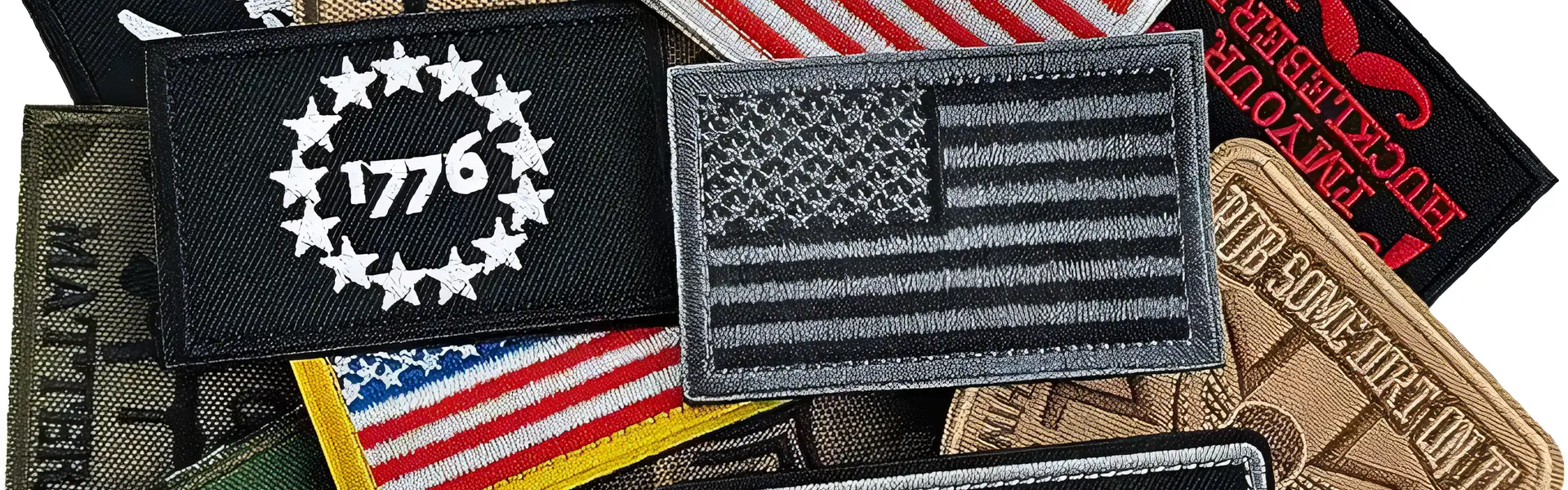
- Flag and patriotic patches: U.S. flags in standard, subdued, and reverse-field versions; state flags; historical flags including the Gadsden “Don't Tread On Me.” Country flags for international service or heritage.
- Blood type patches: the full ABO+/− set in black and Multicam, designed to mark IFAKs and trauma kits. Standard formats are A POS, O NEG, and so on, in a high-contrast color so a medic can read it fast.
- Humor and pop culture: pun patches, meme patches, dark-humor patches, and a long catalog of references to movies, games, and shows. This is the category that grew the fastest as morale patches moved into civilian use.
- First responder: Thin Blue Line, Thin Red Line, EMS Star of Life, and similar.
- Subdued, low-vis, and IR variants: muted color palettes, the standard for tactical morale patches and field gear that doesn't need bright accents.
- Brand patches: collectible patches from companies like Maxpedition and Mil-Spec Monkey, which both run ongoing limited and themed series.
If you're shopping for a gift and you're not sure where the recipient lands on the humor-versus-serious spectrum, a blood type patch or a clean U.S. flag patch is almost always a safe pick.
What to look for when buying a morale patch
Patches in the $2 range and patches in the $8 range are not the same product. Here's what separates them.
On embroidered patches:
- Stitch density. Hold the patch up to a light. If you can see the backing fabric clearly through the embroidery, the stitches are too loose and the design will fray fast.
- Edge finish. A clean overlock or merrowed edge — the rolled stitching that runs all the way around the perimeter — is the difference between a patch that lasts and one that unravels at the corners after a few months.
On PVC patches:
- Color registration. Fine details should be sharp, not muddy. Run your thumbnail over the surface; the raised areas should have crisp transitions, not soft, washed-out edges.
- Backing thickness. A thin, floppy PVC patch with weak hook backing peels off after a few attachments. A quality PVC patch has rigid hook material and feels substantial in the hand.
Across both:
- Hook backing quality. This is the failure point most people don't check. Cheap patches use thin, low-density hook material that gives up after five or six swaps. Quality patches use full-coverage, thicker hook that grips for years.
- Sizing. Standard morale patch sizes are roughly 2″×3″ and 3.5″×2.5″. If a patch is way off these dimensions, double-check that it'll fit the loop panel on your gear before ordering.
For mid-tier reliable choices, Maxpedition and Mil-Spec Monkey are two brands we've stocked across many production runs without complaints. Both run between $5 and $9 in most cases, both use full-coverage hook, and both produce patches that hold up to real use.
Inside the patch collecting community
There's a real collecting subculture around morale patches, and it goes back further than most people realize.
WWI- and WWII-era unit insignia have been a recognized military collectible for over a century. Modern morale patches inherit that tradition: limited drops, themed series, unit-specific runs, and trade-only patches all circulate in collector communities online and at gun shows. The “Morale Patch Black Market” Facebook group and similar spaces are where a lot of the trading happens.
If you're more drawn to the historical end of this — actual unit patches from real militaries, with verifiable provenance — that's a different category from modern morale patches, and it's worth treating it that way. Our military collectibles section is where vintage unit insignia, helmet badges, and similar pieces live, with the dating and condition documented as honestly as we can describe them.
Putting it all together
Morale patches are a small purchase with an outsized effect on how your gear looks, works, and represents you. The category rewards a little bit of intention — the right material for the job, an honest patch from a brand that builds them well, and a placement that earns the loop real estate it occupies.
A few takeaways worth keeping:
- Pick embroidered for traditional textures, PVC for weather and abuse, and woven for fine detail
- Hook-and-loop dominates because it's swappable; if your gear doesn't have a loop panel, you can add one in ten minutes
- Blood type patches on IFAKs are one of the few placements where a morale patch is doing real work in an emergency
- A $4 patch and an $8 patch are different products — check stitch density, edge finish, and hook backing before you commit
- The collecting community around morale patches is older and deeper than the tactical-gear-store version of the category suggests
If you're starting a setup from scratch, building out a plate carrier, or just looking for a smart gift for someone in the hobby, our morale patches collection is a reasonable place to look. We carry tactical, patriotic, blood type, and humor designs across the price band, and we've handled enough of them over the years to point you at the ones worth keeping.
If you have a specific patch you're hunting for and don't see it on the site, get in touch. Stock turns over regularly, and we sometimes have things in the pipeline that haven't gone live yet.