
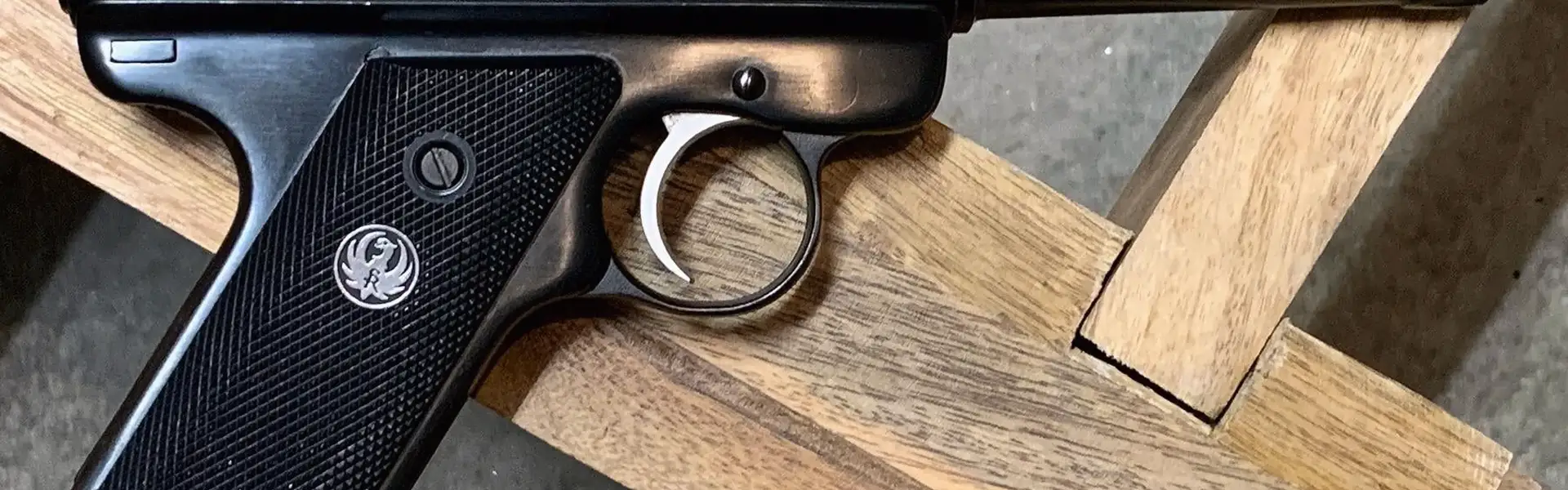
Ruger Mark II Magazines
Mec-Gar Factory OEM • Mark II (1982–2004) • .22 LR • 10-Round
The Ruger Mark II — produced 1982 through 2004 in the longest-running generation of Bill Ruger's 1949 .22 LR target pistol lineage — was the dominant American bullseye match pistol of the 1990s and built an enormous installed base of still-running pistols. Ruger discontinued factory Mark II magazines after the 2005 Mark III redesign changed the magazine geometry; the commercial replacement source is Italian magazine manufacturer Mec-Gar, the factory OEM for Beretta, Sig Sauer, and dozens of other major platforms. Keep Shooting carries the Mec-Gar Mark II 10-round magazine at $21.79 — the working solution for 40+ years of Mark II ownership.
About Ruger Mark II Magazines at Keep Shooting
Keep Shooting carries the Mec-Gar Ruger Mark II Magazine ($21.79, 10-round factory-OEM-equivalent) for the Ruger Mark II target pistol family produced 1982 through 2004. Ruger discontinued factory Mark II magazines after the 2005 Mark III redesign changed magazine geometry and broke cross-compatibility between the two generations; Mec-Gar (Gussago, Italy — factory OEM supplier to Beretta, Sig Sauer, and dozens of other major pistol platforms) stepped in as the primary commercial Mark II magazine source. For the current-production Mark III / Mark IV magazines (different geometry, NOT Mark II compatible), see our Mark III Magazines and Mark IV Magazines categories. For the broader Ruger magazine lineup, see our parent Ruger Magazines category, or the Ruger brand page for the full Ruger catalog.
The Ruger Mark II was introduced in 1982 as the second generation of Bill Ruger's Mark- series .22 LR target pistol family (after the 1949 Ruger Standard and the 1951–1982 Mark I target variant). The Mark II represented Ruger's first major engineering revision to the platform in 33 years and remained in continuous production for 22 years through 2004 — the longest-running generation in Mark-series history, outlasting both the Mark III (2005–2016, 11 years) and the current Mark IV (2016–present, 9 years and counting). The Mark II's extended production run meant the pistol was the dominant American .22 LR target- pistol platform throughout the 1990s and early 2000s, with hundreds of thousands of units produced and a civilian ownership base that remains enormous in the present day — every Mark II ever produced is now 21 to 43 years old, and the vast majority are still in active use.
Mark II engineering changes from the 1951–1982 Mark I centered on three specific improvements. An improved extractor with better spring geometry that resolved occasional extraction failures on the Mark I under sustained-fire conditions. A bolt hold-open on empty magazine — the bolt locks to the rear after the last round is fired, a feature the original 1949 Standard and Mark I lacked entirely (shooters had to manually lock the bolt back or check the chamber to confirm empty). A scalloped receiver with a slightly relieved bolt cocking- ear area for easier slide manipulation. Beyond these three changes, the Mark II carried over the fundamental 1949 architecture that would persist through the Mark III: the round receiver with fixed barrel, the straight-blowback rimfire action, and the famously difficult multi-step disassembly that would finally be solved only with the 2016 Mark IV.
Mark II variants covered the same target / competition spectrum that would define the Mark III and IV generations. The Mark II Standard (4.75-inch barrel, the baseline target-pistol configuration), Mark II Target (5.5-inch bull barrel, adjustable sights — the bullseye-competition workhorse), Mark II Government Target Model (a specific variant adopted by the US military for marksman- training use in the 1980s and 1990s — a notable exception to the typical civilian .22 LR target pistol market), Mark II Competition (bull barrel with muzzle compensator and competition sights), Mark II 22/45 (polymer 1911-angle grip frame, introduced in the 1990s), and the long-barreled Mark II Hunter variants. Non-22/45 Mark II pistols share the common Mark II magazine covered in this category; 22/45 variants use a different magazine for the 1911-angle polymer grip.
The Mark II's place in American bullseye history. Through the 1990s, the Mark II Target and Competition variants dominated the US NRA Conventional Pistol (bullseye) match circuit — the primary American .22 LR precision-pistol competition discipline running from local club matches through the national championship at Camp Perry, Ohio. The Mark II Government Target Model was issued to US military marksmanship training units and appeared regularly on the firing line at Camp Perry matches. Competition shooters at Olympic pistol-shooting levels typically used European match pistols (Hämmerli, Walther, FWB) rather than Mark IIs, but at the civilian bullseye-match level the Mark II Target was the dominant affordable American-made precision .22 LR platform.
Why Ruger stopped making Mark II magazines. When Ruger redesigned the Mark-series for the 2005 Mark III launch, the engineering team changed the magazine release geometry and feed-lip angle as part of the Mark III's updated internal mechanisms. This broke cross-compatibility between Mark II and Mark III magazines — a Mark III magazine will NOT seat properly in a Mark II frame, and a Mark II magazine will NOT function in a Mark III. Ruger prioritized forward-looking magazine commonality with the new platform over backward compatibility with the existing Mark II installed base, and gradually wound down factory Mark II magazine production in the years following the Mark III launch. By 2010, Ruger factory Mark II magazines were increasingly difficult to source through commercial channels; by 2015, the commercial factory-Ruger supply had effectively ended. Aftermarket manufacturers — principally Mec-Gar — stepped in to fill the gap.
Mec-Gar (Mec-Gar S.r.l., founded 1965 in Gussago, Italy near Brescia) is the largest pistol-magazine manufacturer in the world and the factory OEM supplier for Beretta, Sig Sauer, Smith & Wesson, Ruger, CZ, Springfield Armory, and FN Herstal (the Hi Power production cycle). Mec-Gar magazines for platforms Mec-Gar supplies as OEM are functionally identical to the factory- branded magazines — same tooling, same factory, same specifications. For the Mark II, Mec-Gar's position is slightly different: Mec-Gar was not Ruger's factory OEM during Mark II production, but Mec-Gar engineered a Mark II- compatible magazine to factory specification as the Mark II aftermarket developed after Ruger factory production ended. The Mec-Gar Mark II magazine is the commercial-standard replacement magazine today — feeds reliably, matches the original Ruger factory spec dimensionally, and carries the Mec-Gar lifetime warranty. For the broader Mec-Gar factory-OEM lineup covering Beretta, Sig, and dozens of other platforms, see our Mec-Gar brand page.
Magazine compatibility for Mark II owners. Mark II magazines (Ruger factory-production or Mec-Gar aftermarket) fit the Mark II Standard, Mark II Target, Mark II Competition, Mark II Hunter, Mark II Government Target Model, and Mark II Bull Barrel variants. They do NOT fit Mark III (2005–2016) or Mark IV (2016–present) — different magazine geometry entirely. They do NOT fit the original Mark I (1951–1982) — Ruger made incremental magazine-release changes between the Mark I and Mark II that broke full cross-compatibility. The Mark II 22/45 variants use a different magazine that fits the 1911-angle polymer grip frame and is NOT interchangeable with standard Mark II magazines. If you own a Mark II 22/45, confirm you are ordering the 22/45-specific magazine.
The Mark II civilian market today is a deeply-aging installed base with specific replacement-magazine demand patterns. Primary buyer profiles: long-term Mark II owners who bought the pistol between 1982 and 2004 and are now replacing original- production magazines with 20–40 years of accumulated spring fatigue (by far the largest buyer cohort — original Ruger factory magazines from the 1990s are commonly found with spring tension below reliable-feed threshold); Mark II collectors who own multiple variants and maintain magazine inventory across Standard, Target, Hunter, and Government Target Model configurations; bullseye competition shooters who continue to compete with Mark II Target pistols at club-level NRA Conventional Pistol matches despite the newer Mark III and Mark IV options — the 1990s-era Mark II triggers have a distinct feel that competition shooters who trained on them prefer; and veterans who used Mark II Government Target Models in military marksmanship training and own the platform as a service-memory firearm.
Keep Shooting ships the Mec-Gar Mark II magazine from our Pennsylvania warehouse with free shipping on orders over $49.95 and hassle-free returns. The Mark II's 10-round capacity ships to all 50 US states — the rimfire target-pistol capacity falls below every state-level magazine capacity restriction. Whether you're a long-term Mark II Standard owner replacing magazines that have developed spring fatigue after three decades of use, a Mark II Target competition shooter building up spare magazine inventory for continued bullseye match participation, a Mark II Hunter owner maintaining magazine spares for small-game field use, a veteran carrying a Mark II Government Target Model as a service-era keepsake, or a Mark II collector rebuilding factory- correct magazine inventory across multiple pistol variants, the Mec-Gar Mark II magazine in our catalog is the standard commercial replacement for the Ruger factory magazine production that ended around 2010–2015, and carries Mec-Gar's lifetime manufacturer warranty.
Frequently Asked Questions — Mark II Mags
Keep Shooting carries a wide selection of Mark II Mags products from trusted brands. Browse our catalog to see the full range, and use the filters on the left to narrow by brand, price, or product type.
Yes! All orders over $49.95 qualify for free shipping, including Mark II Mags products. Orders typically ship within 1–2 business days.
Keep Shooting offers hassle-free returns on Mark II Mags products. If you're not completely satisfied, contact our customer service team for a return authorization. All products must be in original, unused condition.
If you need help choosing the right Mark II Mags product, our team is available to assist. Check individual product descriptions for detailed specifications, or contact us directly and we'll help you find the best fit for your needs.