
Tactical Gear Guide • May 2026
How to Choose the Right Mag Pouch for Your Gun
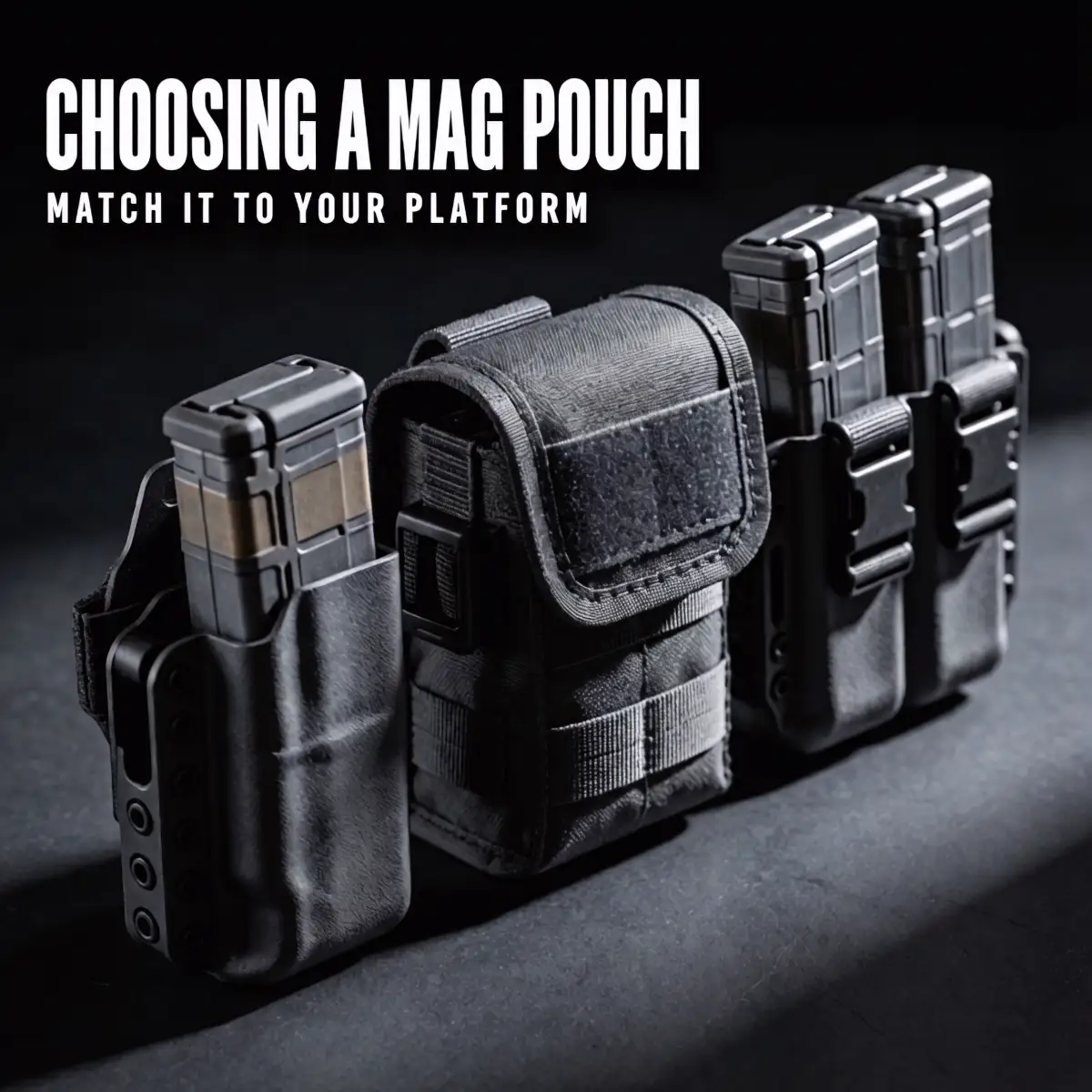
Choosing a mag pouch comes down to platform, retention, and how you carry — here's how to match the right pouch to your gun and the way you actually shoot.
Where you put your spare magazine determines how fast you can reload, and whether you can reload at all when you're moving, sweating, or under any kind of stress. The pouch is doing more work than most people give it credit for.
Walk into any pro shop or scroll through any retailer and you'll find dozens of mag pouch options ranging from $5 surplus flap pouches to $40 hybrid Kydex carriers. Most of them work. A few don't. And the right one for you depends on the magazine, the platform, and how you actually shoot.
We've stocked mag pouches in just about every form factor for over two decades, from East German leather flap pouches to current-generation Kydex hybrids. Here's how 23 years of helping shooters set up belts, plate carriers, and range rigs has shaped the way we'd suggest you think about it.
By the end of this guide, you'll know how to match a mag pouch to your platform, your use case, and the way you carry, without overspending or over-rigging.
What is a mag pouch?
A mag pouch is a dedicated carrier that holds a spare magazine on your belt, plate carrier, chest rig, or pack so you can reload your firearm quickly and consistently. Pouches differ by material, retention method, and mounting system, and the right combination depends on the magazine you're carrying and how you'll use it.
In practice, a mag pouch does three jobs:
- Holds the magazine securely while you move
- Indexes the magazine in a consistent spot so your reload becomes muscle memory
- Protects the feed lips and follower from impact, dirt, and debris
A cargo pocket can hold a magazine. A dump pouch can catch one. Neither does the second job, which is the one that matters when speed counts.
Start with the magazine, not the pouch
The biggest mistake we see is shooters buying a pouch first and then trying to make their magazine fit it. That's backwards. Match the pouch to the magazine geometry first, then worry about everything else.
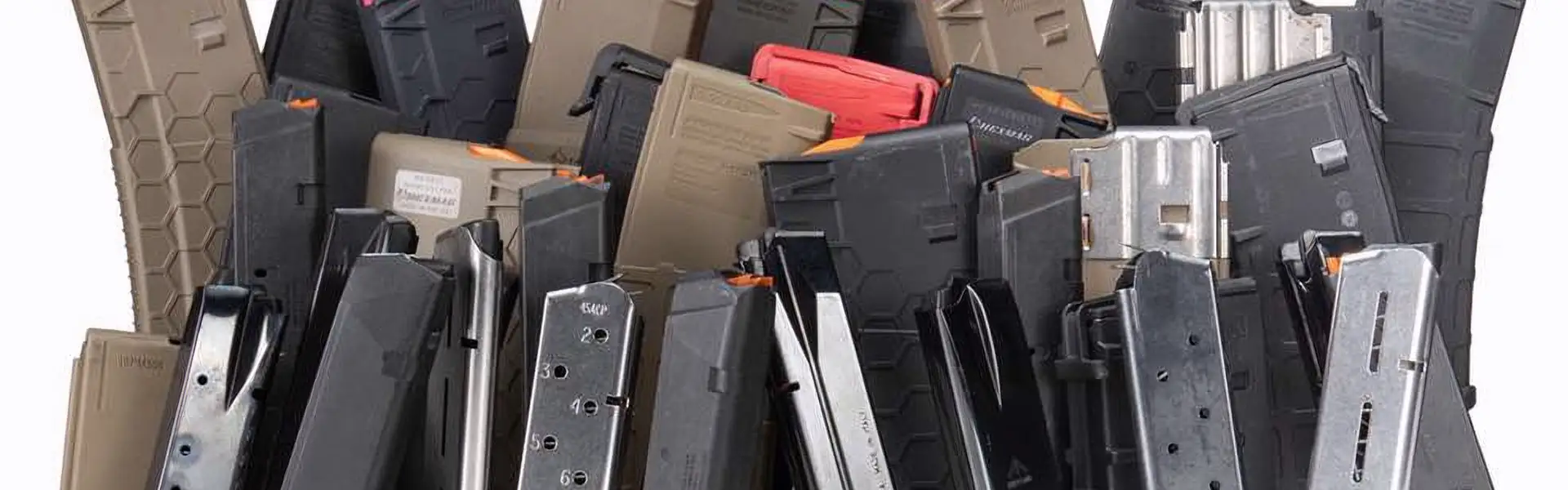
Different platforms have different mag profiles, and “universal” pouches are not actually universal:
- AR-15 / STANAG: The most standardized profile in the industry, around 7 inches long for a 30-round mag and 5 inches for a 20. Widest AR-15 mag pouch selection of any platform, easiest to fit. Magpul PMAGs and most aluminum USGI mags drop in cleanly.
- AK-47 and AK-74: Steeper curve, rocker-style insertion. Most AR-15 pouches won't accept these properly. Look for an AK mag pouch sized for the platform or a generous open-top design.
- Pistol single-stack (1911, single-stack 9mm subcompacts): Thinner mag bodies. Often need adjustable retention to hold securely.
- Pistol double-stack (Glock, M&P, P320, CZ): The industry default. Most pistol mag pouch designs, single or double, are sized for these.
- Aftermarket profiles: Extended baseplates, +2 or +5 extensions, drum mags, and oversized polymer mags can defeat tighter Kydex pouches. Test-fit before you commit.
If you're not sure what you've got, our magazines category is organized by platform so you can confirm the model and capacity before you start shopping for a carrier.
Why “universal” pouches aren't always universal
Open-top elastic pouches are the closest thing to truly universal. A nylon body with a Kydex insert (the Esstac Kywi and HSGI Taco being the two best-known examples) will accept a wider range of mag profiles than a fixed Kydex shell. But even those have limits. An AK mag with a steep curve and a polymer body still doesn't ride the same as a flat AR-15 polymer mag, and a 1911 single-stack will rattle around in a pouch sized for a Glock 17. Match first, save guesswork later.
Mag pouch materials: Kydex vs. nylon vs. leather
The three main materials all have a place. The right choice depends on what you're optimizing for: draw speed, flexibility, or quiet carry.
| Material | Best For | Draw Speed | Retention | Typical Price |
|---|---|---|---|---|
| Kydex / polymer | Range, competition, fast reloads | Fastest | Adjustable, audible click | $25–$50 |
| Nylon (Cordura) | Tactical, plate carriers, oversized mags | Medium | Friction or flap | $15–$30 |
| Hybrid (Kywi/Taco) | Mixed-platform carry, varied mag profiles | Fast | Friction insert + elastic | $25–$40 |
| Leather | Duty, concealed carry, traditional | Medium | Snap or friction | $30–$80 |
| Surplus flap | Casual range, hiking, reenacting | Slow | Flap with strap or snap | $5–$15 |
A few things to know:
Kydex is rigid, fast, and predictable. The mag clicks in, clicks out, and the geometry never changes. It also doesn't accommodate oversized aftermarket mags well, so check fit before you order.
Nylon flexes around the mag, which makes it more forgiving for unusual mag profiles and quieter when you're moving through brush. The tradeoff is a slightly slower draw and the possibility of the pouch sagging under a loaded mag if it doesn't have an internal stiffener.
Hybrid pouches combine an elastic body with a Kydex retention insert. Esstac's Kywi and HSGI's Taco built this category. They're popular for shooters running mixed platforms or oversized mags because the body stretches and the insert still grips.
Leather still has a real place in duty and traditional concealed carry. It's quiet, it ages well, and a well-broken-in leather pouch is hard to beat for daily wear. It does need break-in time and basic maintenance.
Surplus flap pouches show up regularly in our surplus tactical gear inventory. East German, Czech, and Swiss patterns are common. They're slower than modern open-top designs, but they're affordable, they protect the mag completely, and for hiking, hunting, or casual range carry they hold up just fine.
Retention: how the pouch holds the mag
Retention is the system that keeps the magazine in the pouch when you're moving and lets it come free when you want to reload. Three categories cover most options.
Passive (friction) retention is the modern range and competition standard. The pouch grips the mag through tight tolerances or a tensioned insert. No straps, no flaps, fastest draw. Almost every Kydex pouch and every Kywi-style hybrid uses this.
Active retention uses a flap, snap, or bungee strap to lock the mag in place. Slower to draw, but harder to lose the mag if you're crawling, tumbling, or running through cover. Most agency duty rigs require active retention for that reason.
Adjustable retention uses a set screw or tension panel to dial the grip. Common on Kydex pouches. Worth setting once at home with the exact mag you'll carry, including any extended baseplate.
Bullets-forward vs. bullets-back
Pouch orientation is its own decision, and most competitor guides skip it. Belt-mounted mag pouches generally face one of two ways:
- Bullets-forward: Rounds point toward the muzzle of the gun when you're standing. Most competition shooters run this orientation because it indexes the support hand naturally during the reload.
- Bullets-back: Rounds point toward your body. More common on duty rigs and tactical setups, where bullets-forward can interfere with low-ready movement.
There's no universal right answer. Pick one, train with it, and stay consistent. Your hand learns where the mag lives. Switching orientation mid-season costs you reps.
How mag pouches mount to your gear
Mounting is the second most-asked question after material. Four common systems cover almost everything you'll see.
MOLLE / PALS is the universal tactical standard, and the most common mounting system for an AR-15 mag pouch, an AK mag pouch, or a pistol carrier on a plate carrier. The 1-inch nylon webbing grid was adopted by U.S. forces in 1997 as part of the MOLLE load-carrying system. Today every plate carrier, chest rig, war belt, and most range bags ship with PALS webbing that accepts MOLLE-compatible pouches. To attach: open the strap, weave through both your gear and the pouch's mounting layers (alternating sides as you go), then snap or tuck closed. A loose weave defeats the system. Make it tight.
Belt mounts include sewn belt loops, MALICE clips, Tek-Loks, and paddle attachments. These let you run mag pouches on a standard 1.5 or 1.75-inch gun belt without MOLLE. Most range and competition shooters use this setup.
IWB clips are the dedicated concealed-carry mount. A single Kydex mag carrier with a polymer or metal belt clip rides inside the waistband, usually behind the support-side hip, hidden under a shirt. Most CCW shooters set up alongside their concealed carry holsters, since the carrier and holster usually get bought together.
Sew-on and direct-attach are mostly seen on older surplus pouches and uniform integrations. Reliable, but you can't move them between rigs.
Adding MOLLE real estate where you don't have any
If your range bag or plate carrier didn't come with PALS in the spot you need, you have options. Aftermarket loop panels with sewn or stitched MOLLE webbing exist, and you can also use a Tek-Lok or MALICE clip to mount a MOLLE pouch to a non-MOLLE belt. It's not elegant, but it works.
Single, double, triple: how many mag pouches do you need?
This is where most shooters over-buy. Match capacity to use case, not to what looks tactical.
- Concealed carry: One spare mag is the standard. Two if you carry a smaller-capacity gun and want a buffer.
- Range / recreational: Two to four pistol mags or three to four rifle mags handles most range days.
- Competition: Division rules dictate. USPSA and IDPA both cap belt-mounted mag count by division, typically four to six. Verify current rules with the sanctioning body before building your rig.
- Duty / professional: Department-specific. Often two pistol plus two to four rifle.
- Tactical / training: Plate-carrier setups commonly run five to six rifle mags plus belt-mounted pistol mags.
Most civilian range shooters do not need a six-pack chest rig. We see customers come in convinced they need to mount everything, then realize after a few range days that two rifle and two pistol mags on a sturdy belt covers 95% of what they'll actually do. Right-size first, scale up only when you've got a reason.
Use-case framing: match the pouch to the job
The same shooter often runs different setups for different jobs. Here's how the common ones break down.
- Range shooting: Open-top friction or hybrid pouches on a sturdy belt. Speed and consistency matter more than security.
- Concealed carry: Single IWB Kydex mag carrier with a belt clip, hidden behind the support-side hip. Pair with a strong-side holster.
- Competition: Angled friction pouches at the 9 o'clock position, mags bullets-forward, on a competition belt. Verify division rules before you build.
- Duty / law enforcement: Active retention required by most agencies. Flap or thumb-break is standard.
- Tactical / training: Rifle mags on the plate carrier front placard or cummerbund, pistol mags on the belt.
- Hunting / outdoor: Surplus flap pouches or simple Cordura-covered designs. Rain protection matters more than draw speed.
- Reenacting / historical: Period-correct surplus pouches in canvas or leather. Match the era and country your impression covers.
A note on surplus mag pouches
Original East German, Czech, Swiss, and Soviet flap pouches still serve well for casual range carry, hunting, and historical impressions. They're affordable, durable, and they've already proven they hold up. For an AK shooter on a budget, surplus chest rigs (chicom or otherwise) remain one of the better values in the category. We see them move regularly out of our surplus by country collection.
What to look for when buying a mag pouch
A few things to check before you order:
- Confirmed fit with your specific magazine, including any aftermarket baseplate or extension
- Stitching density on nylon and Cordura pouches (loose stitching opens up under load)
- Edge finish, particularly on nylon (raw edges fray; bound edges last)
- Hardware quality on Kydex pouches: set screws, tension panels, mounting clips
- Adjustability of retention and ride height
- Material match to your environment (PVC and Kydex don't care about rain; nylon depends on construction)
Honest price tiers, with what each delivers:
- Sub-$15: Entry-level Cordura with basic friction retention or a snap. Surplus flap pouches also live here. Fine for casual range or a backup, less ideal as a primary.
- $15–$30: Solid mid-tier territory. Most civilian range shooters live here, and there's no shame in it. Maxpedition and Blade-Tech have strong options at this price.
- $30+: Premium hybrid and Kydex from Esstac, HSGI, Blue Force Gear, and Safariland. Worth it if you shoot enough to notice, less worth it if your rifle sees the range four times a year.
We don't believe the most expensive option is always the right one. We've seen customers run $18 Cordura double pouches for a decade without a single failure. We've also seen $40 premium pouches earn their price on a duty belt that gets worked hard. Match the spend to the job.
Common mistakes when choosing a mag pouch
A few patterns that come up regularly:
- Buying for the platform you wish you had instead of the one you actually shoot
- Over-buying capacity (six rifle pouches for a once-a-month shooter)
- Ignoring belt rigidity, which makes loaded pouches sag and reload mechanics unreliable
- Mounting too far forward or too far back for a clean draw
- Forgetting about extended baseplates, +2 extensions, and aftermarket polymer mag profiles
- Stacking pouches over body armor without testing reach beforehand
The fix for most of these is the same: load up the rig at home, run dry reloads, and adjust before your first range trip with it.
Pulling it together
A good mag pouch is the difference between a reload that disappears in a second and one that costs you the stage, the moment, or worse. Match the pouch to the magazine first. Match the retention and material to the use case second. Match the mount and capacity to your actual gear and shot count third.
Our tactical gear category covers the modern Kydex mag pouch, MOLLE mag pouch, and Cordura double mag pouch designs, while heritage flap pouches still earn their keep on a hunting belt or a reenactor's rig. If you're building out a platform-specific setup, our Shop by Gun tool filters everything we carry, including pouches, by your specific firearm.
If you're not sure what fits, get in touch. Someone on our team has been here long enough to have set up a rig like the one you're building, and they'll tell you straight if a pouch you're looking at is the right call or not.