
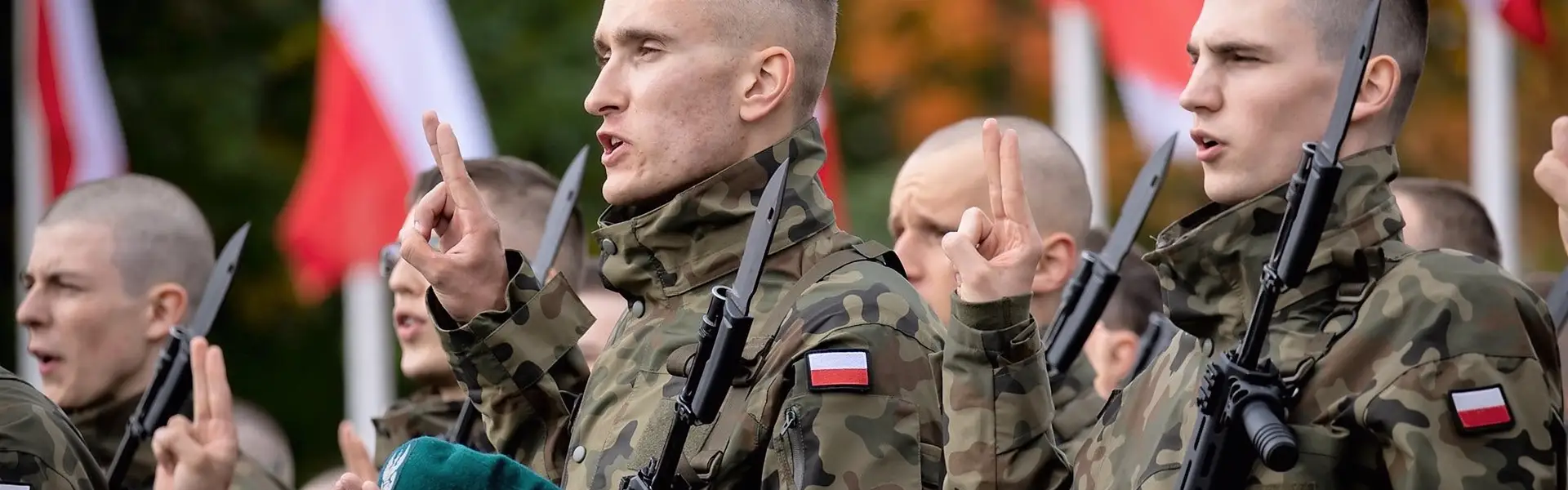
Polish Army Surplus
Pantera Camo • PPS-43 • PM-63 RAK • wz84 Webbing • Cold-War NBC
Authentic Polish Armed Forces surplus from one of NATO's most rapidly expanding militaries — Cold-War-era Warsaw Pact-issue field gear (PPS-43 SMG components, PM-63 RAK pistol-caliber-carbine accessories, wz84 load-bearing equipment, DP-66 Geiger counter, MC-1 NBC gas mask) alongside the modern wz. 93 Pantera camouflage rucksack, the wz. 89 Puma transitional camo gas-mask bag, Polish Navy middy shirt, Polish Army black beret, and the iconic Polish vintage signal flashlight. From Polish factories that produced license-built Soviet SMGs through the 1990s and now equip one of Europe's largest active armies.
About Polish Army Surplus at Keep Shooting
Few militaries have a richer or more consequential 20th-century history than the Polish Armed Forces. Poland was the country whose September 1, 1939 invasion by Nazi Germany started the Second World War; Polish forces fought continuously in exile alongside the Western Allies (Battle of Britain, Tobruk, Monte Cassino, Arnhem) while the Armia Krajowa (AK, Home Army) ran the largest organized resistance in occupied Europe; Cold War Poland was a Warsaw Pact founding member with one of the bloc's most capable armies; and modern Poland — a NATO member since 1999 — is in the middle of the most aggressive military buildup in Europe, on track to field NATO's largest land army by 2030. Keep Shooting's Polish surplus catalog spans that arc — Cold-War Warsaw Pact PPS-43 and PM-63 RAK components, wz84 load-bearing gear, NBC equipment, and modern Pantera-camo field rucksacks.
Polish military history — the WWII generation. When the Wehrmacht crossed the Polish border on September 1, 1939, Poland had Europe's fourth-largest army by manpower but was outmatched technologically. Polish forces nonetheless fought hard for five weeks before the Soviet invasion from the east on September 17 finished the campaign; tens of thousands of Polish soldiers and airmen escaped to France and then Britain to continue the war. Polish pilots flew with the RAF in the Battle of Britain (303 Squadron was the highest-scoring squadron of the battle), Polish ships fought with the Royal Navy (the Polish destroyer ORP Piorun helped track and engage the Bismarck in 1941), Polish ground troops fought at Tobruk and Monte Cassino — the Polish II Corps under General Władysław Anders captured the monastery at Monte Cassino in May 1944, the action that finally cracked the Gustav Line — and the Polish 1st Independent Parachute Brigade dropped at Arnhem in 1944. Inside occupied Poland, the Armia Krajowa (Home Army) numbered roughly 400,000 sworn members at its peak — the largest organized resistance in occupied Europe — and conducted the Warsaw Uprising of August 1944. Most of the AK's specialized operatives were trained by the British SOE and parachuted into Poland under the codename Cichociemni ("Silent Unseen") — a unit whose legacy is the direct ancestor of modern Polish special forces.
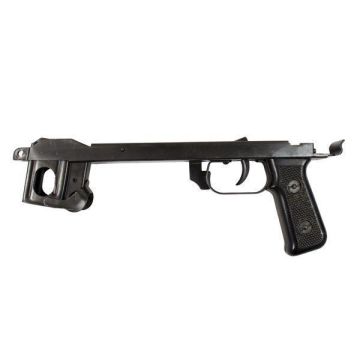
Warsaw Pact Poland — 1955 to 1989. After 1945, Soviet-controlled Poland became a Warsaw Pact founding member when that alliance formed in May 1955. Polish factories — most prominently Łucznik (Radom), the historic state arms maker that had been producing Vis 35 pistols and Mauser rifles since the interwar period — produced license-built Soviet small arms for the Polish People's Army (LWP) and police throughout the Cold War. The PPS-43 (Pistolet-pulemyot Sudaeva obrazets 1943) submachine gun — designed by Alexei Sudayev during the siege of Leningrad as a simpler-to-produce alternative to the PPSh-41 — was license-built in Poland and remained in service with Polish reserve and police units into the 1990s. Our PPS-43 magazine, recoil spring assembly, and lower receiver are authentic Polish production parts. The PM-63 RAK (Pistolet maszynowy wz. 63) was a Polish original — designed by Piotr Wilniewczyc beginning in 1957 and adopted in 1965, the RAK ("Ręczny Automat Komandosów" = "commando hand-automatic") was a compact 9×18mm Makarov PDW issued to tank crews, paratroopers, signal officers, and security units. It served Polish forces from 1965 well into the 2000s. Our PM-63 holster and 25-round magazine are authentic Polish service items. The P-64 (CZAK) 9×18mm Makarov sidearm, designed in 1964 and adopted in 1965, was the standard Polish military pistol through the end of the Cold War — see also the Polish P-64 magazine in our catalog.
NBC equipment and Cold-War civil defense. Like every Warsaw Pact military, the Polish People's Army was equipped to fight in a tactical nuclear environment, and our catalog includes substantial NBC (nuclear-biological-chemical) equipment from that era. The Polish DP-66 Geiger Counter (Polish-produced radiation survey meter) is a working Cold-War-era radiological-detection instrument — rugged, calibrated, and a striking artifact of the period when both sides expected nuclear exchange to be survivable. The Polish MC-1 Gas Mask is the Polish Army NBC mask of the Cold-War era, the Polish MP4 Gas Mask is the more modern (post-1990s) replacement, and the Polish Army Puma-camo and gray gas mask bags are the issue carriers. The wz. 89 Puma camouflage — Poland's transitional pattern from the late Warsaw Pact era through the early NATO accession years — is seen in the Puma-pattern gas mask bag. Add a 40mm gas mask filter from our catalog and the gas mask becomes a complete working NBC unit.
The Solidarity transition and 1999 NATO accession. Poland's transition from Warsaw Pact member to NATO ally is one of the most consequential geopolitical shifts of the 20th century and ran in parallel with the development of modern Polish military gear. The Solidarity (Solidarność) movement founded in Gdańsk in 1980 by Lech Wałęsa eventually broke communist control of Poland by 1989; the Soviet Union dissolved in 1991; the Warsaw Pact dissolved the same year; and Poland joined NATO on March 12, 1999 alongside Hungary and the Czech Republic in the alliance's first post-Cold-War eastward expansion. Polish camouflage development tracks this history — the wz. 89 Puma pattern (1989, transitional, woodland-influenced but with Eastern-Bloc design DNA) replaced earlier Warsaw-Pact-era patterns, then the wz. 93 Pantera ("Panther") four-color woodland pattern was adopted as Polish forces aligned with NATO standards. Pantera remained the standard Polish camouflage from 1993 through roughly 2010 — when the modern wz. 2010 multicolor pattern replaced it. Our Polish M93 Pantera-camo rucksack is the authentic 1990s/2000s-era field pack from that period.
Modern Poland — NATO's largest army. Following Russia's 2022 invasion of Ukraine — Poland's eastern neighbor — the Polish government announced what is now the most aggressive military buildup in modern European history. As of 2024 – 2025, Poland has committed to expanding active force size to 300,000 soldiers (up from roughly 150,000 in 2021), procured approximately 1,000 South Korean K2 Black Panther main battle tanks and 250 American M1A2 Abrams, ordered FA-50 light combat aircraft and F-35 stealth fighters, and is deploying multiple battalions of HIMARS rocket artillery and K9 Thunder self-propelled howitzers. Poland now spends approximately 4.7% of GDP on defense — the highest in NATO, exceeding even the United States. The combination of geographic position (sharing borders with Belarus, the Russian Kaliningrad exclave, and Ukraine), historical memory (1939 invasion still in national consciousness), and modern capability investment makes Poland increasingly central to NATO's eastern defense.
GROM — Polish special forces and the Cichociemni legacy. JW GROM (Jednostka Wojskowa Grupa Reagowania Operacyjno- Manewrowego) — Poland's tier-1 special-operations unit, founded July 13, 1990 by Brigadier General Sławomir Petelicki — derives explicitly from the WWII Cichociemni lineage. The unit's formation date was chosen to honor Operation Most III, the WWII Home Army operation that captured a Nazi V-2 rocket and smuggled it to British intelligence — a textbook example of the strategic-impact unconventional warfare GROM is designed to conduct. GROM has operated alongside US Delta, US Navy SEALs, and British SAS in every major US-led operation since the early 1990s — the Haiti intervention, both Iraq wars, and Afghanistan — and is widely regarded among Western SOF professionals as a peer-tier unit. JW Komandosów (1st Special Commando Regiment), JW Formoza (Naval special forces), and JW AGAT (newer light SOF unit) round out Polish special-operations command.
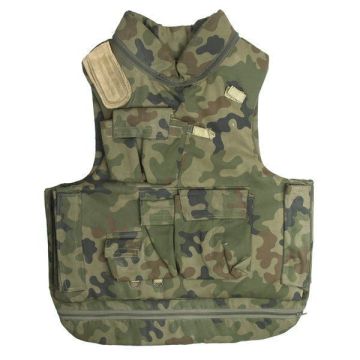
Polish field gear in our catalog. Beyond the firearm-related items above, our Polish surplus includes the Polish Army Black Beret (the headgear of Polish armored units — black berets are standard for tank crews across most NATO and Warsaw-Pact- legacy militaries), the Polish Navy Middy Shirt (traditional naval uniform shirt — Poland maintains a small but historic navy whose wartime contribution was disproportionate to its size; the ORP Piorun's engagement with Bismarck in May 1941 is the most famous single Polish naval action), the Polish Army wz84 Suspenders (Cold-War-era load-bearing suspenders for trouser and field-equipment support — at $0.95 these are one of the single best-value pieces of authentic military surplus in the entire catalog), the Polish Army Pant Liner (cold-weather thermal trouser liner), the Polish Vintage Signal Flashlight (battery-operated signaling light from the Cold War era — a classic militaria piece), and the Polish Army Flak Vest — Cold-War-era Polish-produced body armor.
Eastern Bloc surplus context. Polish surplus sits within the broader Warsaw-Pact-legacy surplus ecosystem. The Czech Army Surplus, East German Army Surplus, Hungarian Army Surplus, Romanian Army Surplus, Bulgarian Army Surplus, and Russian Army Surplus catalogs are the natural companion lines for Cold-War Eastern-Bloc surplus collectors. For component-level shopping see our PPS-43 Parts category and our Military Surplus Magazines category, which carries Polish P-64 and PM-63 magazines alongside the broader Warsaw-Pact magazine catalog. For gas masks and NBC gear see our Military Surplus Gas Masks category and for body armor see Military Surplus Body Armor. The Pantera rucksack lives in Military Surplus Bags & Packs, and the Polish Army Black Beret in Military Surplus Hats & Caps.
Keep Shooting ships all Polish Army surplus from our Pennsylvania warehouse with free shipping on orders over $49.95 and hassle-free returns. Whether you are a Cold-War-era militaria collector after authentic PPS-43 components or a working DP-66 Geiger counter, a Warsaw-Pact-pistol owner sourcing PM-63 RAK or P-64 Makarov-caliber accessories, a Pantera-camo enthusiast hunting for the wz. 93 field rucksack, or a student of European 20th-century history collecting from the country whose 1939 invasion started the deadliest war in human memory and whose 1989 Solidarity movement helped end the Cold War — every item in our Polish surplus catalog is genuine Polish-Armed-Forces issue, not commercial reproduction.
Frequently Asked Questions — Polish Army Surplus
Keep Shooting carries a wide selection of Polish Army Surplus products from trusted brands. Browse our catalog to see the full range, and use the filters on the left to narrow by brand, price, or product type.
Yes! All orders over $49.95 qualify for free shipping, including Polish Army Surplus products. Orders typically ship within 1–2 business days.
Keep Shooting offers hassle-free returns on Polish Army Surplus products. If you're not completely satisfied, contact our customer service team for a return authorization. All products must be in original, unused condition.
If you need help choosing the right Polish Army Surplus product, our team is available to assist. Check individual product descriptions for detailed specifications, or contact us directly and we'll help you find the best fit for your needs.